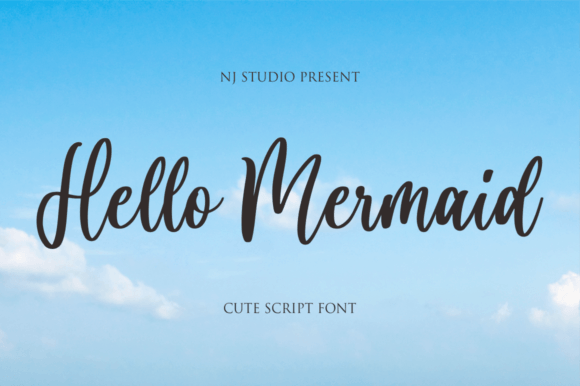
Hello Mermaid: A Handwritten Script Font for Modern Web Design
Testing Hello Mermaid on a recent boutique website project was one of those moments where the right font just clicks. I was working on a creative portfolio site for a local designer, and the challenge was to find a typeface that felt both personal and professional. Hello Mermaid, with its playful yet elegant handwritten script, fit perfectly into the brand’s tone.
The first thing I noticed about Hello Mermaid is how it feels like a real person’s handwriting. It has subtle variations in stroke thickness and gentle curves that give it a natural, organic feel. This kind of character makes it ideal for websites that want to convey warmth, creativity, or a personal touch without losing professionalism.
Visual Appeal and Brand Personality
Hello Mermaid adds a romantic and whimsical mood to any design. Its soft, flowing lines make it especially well-suited for hero sections, greeting cards, and other digital assets that need a bit of personality. When I placed it over a full-width image banner for the portfolio homepage, it created a nice contrast without overwhelming the background.
I used it as the main headline for the hero section, and it immediately gave the page a more inviting feel. The font didn’t feel too formal, which aligned with the client’s goal of showcasing their creative process in a friendly, approachable way.
Readability and Responsiveness
One of my biggest concerns when choosing a script font is readability, especially on mobile devices. Hello Mermaid performed well in this area. Even at smaller sizes, the letters remained legible, and the spacing between characters helped maintain clarity. For buttons and short phrases, I found that it worked best when paired with a clean sans-serif font for body text.
On mobile layouts, I made sure to adjust the font size slightly and increase the line height to prevent the text from feeling cramped. Testing different weights and styles also helped me find the right balance between decorative flair and usability.
Use Cases Across Digital Projects
Hello Mermaid isn’t limited to just one use case. Here are some realistic scenarios where it can shine:
- Hero Sections: As the main title in a hero section, it adds visual interest while keeping the focus on the message.
- Call-to-Action Areas: Used sparingly on buttons or banners, it can create a sense of urgency or excitement.
- Blog Headers: Perfect for blog posts that have a creative or storytelling angle.
- Product Landing Pages: Ideal for luxury or handmade product sites looking to add a unique branding element.
- Coaching Websites: Adds a warm, personal touch that aligns with coaching and wellness brands.
- Digital Ads: Great for social media graphics or ad creatives that need a memorable visual hook.
I’ve seen many designers use script fonts in ways that either work or fall flat. With Hello Mermaid, I found that it works best when used as a display font rather than for long paragraphs. It’s not meant to be read for extended periods, but it shines in short bursts of attention-grabbing text.
Font Pairing and Brand Consistency
To ensure the design looked polished, I paired Hello Mermaid with a modern sans-serif font for body copy. This combination helped maintain a clear visual hierarchy—script for headings, sans-serif for content. It also made the site feel more balanced and professional.
For a more editorial feel, pairing Hello Mermaid with a serif font could be an option. But for most web projects, a sans-serif font is the safer and more accessible choice, especially for longer text blocks.
Practical Considerations Before Using Hello Mermaid
Before implementing Hello Mermaid on any live site, I checked a few key factors:
- Webfont Availability: Confirming that it’s available as a webfont was essential for ensuring smooth performance across devices.
- File Formats: Supporting formats like WOFF and WOFF2 ensures compatibility with modern browsers.
- Licensing: Making sure the font comes with commercial use rights is crucial, especially for client projects or online stores.
- Alternates and Weights: While Hello Mermaid is primarily a single-style script font, checking if it includes alternate characters or stylistic sets can help with customization.
- Multilingual Support: If the site targets international audiences, verifying support for different languages is important.
These checks helped avoid potential issues down the road and ensured the font would perform well in a variety of contexts.
Overall, Hello Mermaid proved to be a great addition to the portfolio site. It brought a sense of charm and individuality that matched the brand’s identity. Whether you’re designing a creative portfolio, a boutique store, or a course landing page, this font offers a versatile solution for adding personality to your digital designs.